KonKan
- 4.7
- Rating
- 100.00K
- Installs
- Free
- Price

 Analysis by App-foxy
KonKan is the kind of board game I would open when I want something focused but not exhausting. It presents itself as a Kurdish KonKan experience, and that identity matters: the appeal is not only in arranging pieces or planning a turn, but also in the feeling that the game is built around a particular cultural and linguistic setting rather than being another anonymous board-game clone. After spending time with it, I found the strongest reason to try it is its combination of familiar tabletop thinking and a more distinctive regional character.
At its core, this is a free board game from ModayMn.official for Android users running version 7.0 or later. It has reached over 100 thousand installs and holds a 4.7 average from around 11 thousand ratings, which suggests that the basic experience has connected with a sizeable audience. The current release is version 2.3.1, and the age classification is Everyone, making it approachable for a broad range of players. There are optional in-app purchases priced from $0.99 to $79.99 per item, so I would still approach the free download with a little awareness if children use the device.
A board game with a clear sense of place
I found KonKan’s appeal in the way its board-game format is tied to a distinct Kurdish identity, rather than presented as a generic pastime. In this section, I look at how that sense of place shapes the first impression and what it may mean for players approaching the game from different language backgrounds. That context also sets up a closer look at the experience of getting started.
You May Also Like

 Blood Strike: 2.5 Anniversary
Blood Strike’s Loadouts Turn Every Drop Into a Tactical Gamble
A close look at Blood Strike’s custom loadouts: how fast access to signature weapons reshapes its battle royale rhythm, rewards preparation, and narrows the gap between fights.

 Pandora - Music & Podcasts
Pandora’s Music Is Easy to Start, but Harder to Recover
Pandora’s strength is its low-effort path from a seed to a station. Its weak spot is how much confidence it asks you to place in connection, setup, and quiet recovery.

 8 Ball Pool
 Is Built on Rivalries, Rematches, and Routine
A close look at the rivalries, rematches, shared routines, and unanswered safety questions that turn a quick pool match into a persistent mobile community.

 Samsung Music
’s Quiet Strength Is Playing What You Already Own
Its reach comes less from spectacle than from dependable access to a personal library. That simplicity is both the app’s strongest retention engine and its ceiling.

 AccuWeather: Weather Radar
AccuWeather Review: A Quick, Clear Forecast for Everyday Decisions
For everyday plans, the best forecast is the one you can understand quickly. AccuWeather makes rain timing, radar, and local conditions easy to act on, with a few trade-offs.

 Hill Climb Racing
Why Hill Climb Racing Still Turns Crashes Into One More Run
A tiny car, a bumpy hill and one more upgrade: Hill Climb Racing keeps resurfacing because its simple chaos makes every near-miss feel personal.
More From Our News Desk



The first few minutes set the tone
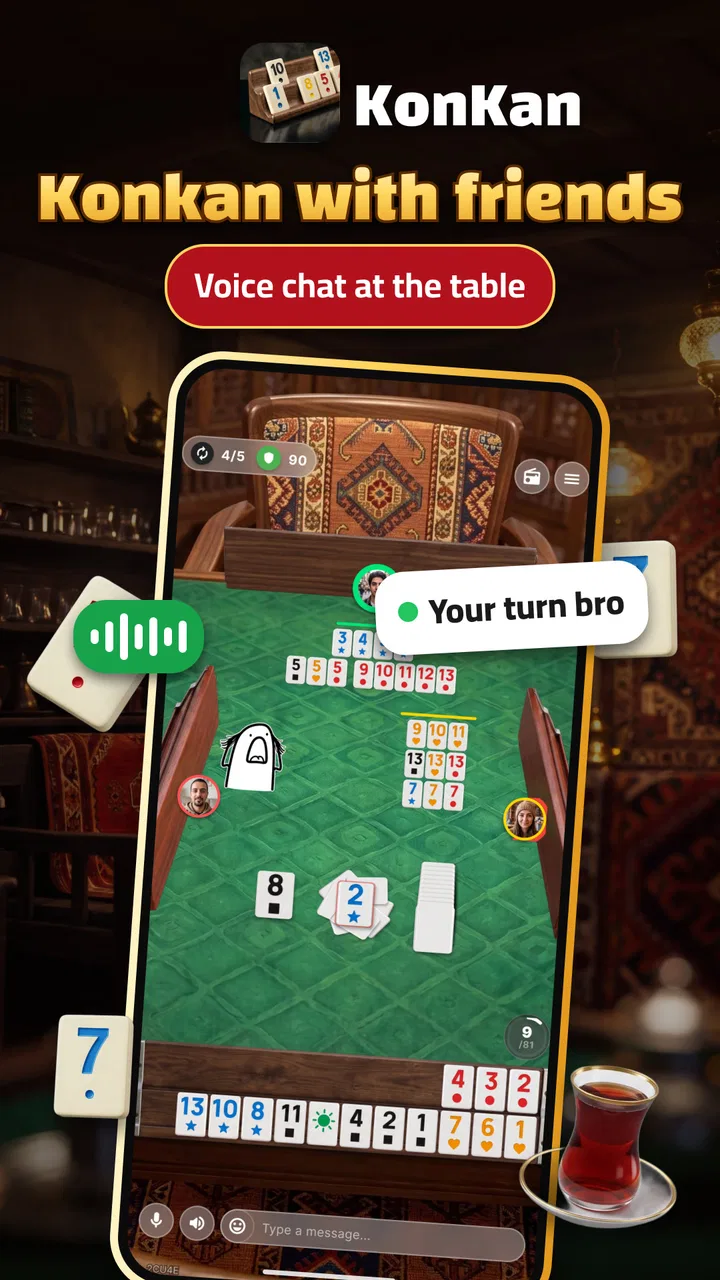
My first impression was shaped less by spectacle and more by presentation. KonKan does not need a huge action-game interface to make its point. A board game lives or dies by whether the screen makes the next decision understandable, and this title works best when I can concentrate on the arrangement in front of me instead of fighting the interface. That restrained focus suits the genre and gives the game a calmer opening than many mobile games.
The Kurdish framing gives the experience a personality that standard digital board games often lack. Many alternatives feel interchangeable because they use the same visual language, the same generic menus, and the same broad theme. Here, the setting is part of the reason to stay. Even when the play itself follows familiar board-game habits, the cultural identity makes the session feel more specific and memorable.
I also appreciated that the game can be considered without a large time commitment. It is easy to imagine opening it during a quiet break, after dinner, or while waiting for someone. That does not mean every session will feel equally exciting. Players who need constant animation, dramatic progression, or a strong story may find the measured board-game pace too restrained. For me, though, that slower rhythm is useful when I want a game that rewards attention rather than reflexes.
What the setting communicates
The strongest artistic choice is the decision to make Kurdish identity central to the experience instead of treating it as a decorative label. A setting feels convincing when the language, visual treatment, and game purpose point in the same direction. KonKan benefits from that alignment. I do not approach it as a generic card or board pastime with a regional skin; I approach it as a localized interpretation of a familiar kind of play.
That distinction is important for two different audiences. Kurdish-speaking players may value the sense of recognition and ownership, while players unfamiliar with the setting can treat the game as an accessible introduction to a different presentation style. I would not claim that a board game alone can represent an entire culture, but the effort to give this one a clear identity is more meaningful than a purely functional interface.
The art direction also supports concentration. Board games need visual hierarchy: the active area must be easy to read, important choices must stand out, and decorative elements should not bury the information needed for a turn. KonKan’s best moments come when its presentation serves that purpose. The mood remains calm enough for planning, but it does not feel completely empty or disconnected from its Kurdish theme.
Language as part of the playable world
The language of a board game is not just a translation layer. It affects how quickly I understand instructions, how naturally I read labels, and whether the game feels like it belongs to a real community. KonKan’s Kurdish focus gives its menus and overall identity a different weight from a standard international board-game app. For a player who already knows the language or wants a more culturally specific experience, that can be a major advantage.
For someone who does not read Kurdish, the learning curve deserves more thought. Familiar board-game patterns may help, but visual familiarity cannot always replace clear text. I would recommend that a newcomer begin patiently, study each screen before making decisions, and avoid judging the game during the first few minutes. The most suitable player is someone willing to learn the presentation rather than expecting every label to feel immediately obvious.
This is one of the title’s clearest trade-offs. A broad, heavily localized alternative may be easier for a player who wants instant instructions in a preferred language. KonKan is more appealing when the Kurdish setting itself is part of the reason for playing. In other words, its cultural specificity is a strength for the right audience, but it may be a barrier for someone looking only for the most universally familiar interface.
Sound and the rhythm of a session
Sound in a board game has a difficult job. It should make actions feel finished and give the session some emotional shape, but it should not interrupt concentration. KonKan’s overall mood works best when audio supports the board instead of trying to dominate it. The result is a more intimate experience than the loud, reward-heavy style common in many free mobile games.
I tend to judge this kind of audio by how it behaves over a longer session. A sound effect can feel pleasant during the first few turns and irritating after repeated use. A good board-game soundtrack should also leave room for thought, particularly when a player is comparing possible moves. KonKan’s measured presentation fits that need better than an aggressive arcade approach would.
There is a practical side to this as well. I would play it differently depending on where I am. At home, sound can help create the intended atmosphere and make the board feel less static. In a waiting room or on public transport, I would keep the volume low or off and rely more heavily on the visual cues. That does not remove the game’s identity, but it does make the experience more dependent on whether the interface communicates clearly without audio.
Why pacing matters more than visual spectacle
KonKan’s pacing is built around consideration rather than speed. That makes it a good match for players who enjoy looking ahead, weighing a choice, and accepting that a strong turn may require patience. I would not recommend it to someone searching for a quick burst of action where every second brings a new event. The reward here comes from the shape of the decision, not from constant stimulation.
A realistic everyday use case would be a short evening session with a friend or family member. One person can introduce the basic idea, the other can watch how the board develops, and the conversation can continue between turns. That social space is valuable because board games often work as shared rituals, not merely as tests of skill. KonKan’s calmer mood makes it easier to keep talking while still paying attention.
It can also suit solo downtime, provided the player enjoys thinking without a dramatic narrative pushing the session forward. I would use it as a mental reset after work: not so demanding that it becomes another obligation, but structured enough to keep my attention away from endless scrolling. The important distinction is that this is a game for deliberate engagement, not passive entertainment.
How the mechanics fit the mood
The mechanics and presentation feel most coherent when the board remains the star. A board game can have beautiful art and sound, but if the rules are hidden behind clutter, the atmosphere collapses. KonKan benefits from keeping the player’s attention on the playable space. The visual mood encourages me to examine the position, think about consequences, and make a choice with purpose.
One useful habit is to treat each turn as a small planning exercise rather than immediately selecting the most obvious move. In a game with a calm pace, rushing is usually self-inflicted. I would first identify what the current arrangement allows, then consider whether a move improves my position now or merely creates a problem for the next turn. This approach makes the experience feel richer than simply tapping the brightest available option.
Another practical tip is to separate learning from performance. On an early session, I would focus on understanding how the board responds instead of trying to play perfectly. That is especially helpful for anyone approaching the game through a language or presentation style that feels unfamiliar. Once the basic flow becomes comfortable, the quieter atmosphere starts working in its favor: I can pay attention to strategy rather than decoding every element.
The free entry point is also mechanically relevant. Since the game can be downloaded without an upfront price, it is easy to test whether the pace and cultural presentation suit me. The optional purchases mean I would avoid assuming that every part of the long-term experience is equally free. Before spending, I would decide whether I am enjoying the core play itself, because no purchase can fix a mismatch between the game’s deliberate rhythm and a player’s preference for faster action.
Where it stands beside familiar alternatives
Compared with a generic board-game app, KonKan’s most obvious advantage is identity. A conventional alternative may offer a more familiar interface, broader language coverage, or a more standardized presentation. KonKan answers with a stronger sense of place and a more focused mood. I would choose the conventional option when I want instant recognition and minimal explanation; I would choose this one when the Kurdish setting is part of what I want from the session.
It also differs from highly competitive mobile games that surround every move with missions, streaks, flashy rewards, and rapid progression. Those games are better for players who need frequent external motivation. KonKan is better for someone who finds satisfaction in the board itself. The trade-off is that the experience may feel modest if I measure value by the amount of content or spectacle on screen.
Against a physical board game, the digital version is more convenient. I do not need to prepare a table, organize pieces, or find a storage place, and the phone makes a casual session easy to start. The physical alternative still has the advantage of face-to-face presence and tactile interaction. If the main goal is a social gathering, a real board may create a warmer atmosphere. If the goal is quick access to a Kurdish-themed digital board experience, KonKan is the more practical choice.
Who should give it a try
I would recommend KonKan to players who enjoy thoughtful board games, appreciate regional cultural identity, and prefer a calm session over a frantic one. It is also a sensible choice for someone looking for an Everyone-rated game that can be tried for free before making a commitment. The combination of a 4.7 average and a substantial existing audience gives it encouraging social proof, although I would still judge it by whether its style matches my own taste.
It may be particularly appealing to Kurdish-speaking users who want a game that feels closer to their language and cultural context than a mass-market board app. It can also interest curious players who are comfortable learning through visual cues and taking a little extra time with an unfamiliar presentation. The game’s value is not limited to winning; it is also in experiencing a board format through a more specific cultural lens.
I would tell highly competitive players to consider their priorities first. If they need deep ranked competition, extensive progression, or a large ecosystem of modes, a more specialized strategy platform may be a better fit. Likewise, players who dislike optional purchases in free games should examine the purchase prompts carefully and keep spending controlled. The free download makes experimentation easy, but it does not automatically make the whole experience free of commercial friction.
Small habits that improve the experience
My first recommendation is to play the opening sessions without multitasking. Because the mood is quiet, it can be tempting to treat the game as background activity. That makes it harder to notice the relationship between a move and the board’s later shape. Giving the first session full attention helps reveal whether the game’s pacing genuinely suits me.
My second recommendation is to use short sessions as a test rather than forcing a long one. A board game with a deliberate rhythm can become more enjoyable after the player understands its flow, but it can also feel slow if the underlying style is not a match. A brief trial tells me more than leaving it installed and never returning to it.
Finally, I would keep the cultural setting in view when comparing it with alternatives. If I evaluate only speed, visual effects, or quantity of features, I may miss what makes this title different. Its strongest quality is the way its board-game purpose, Kurdish identity, and restrained atmosphere support one another. That does not make it universally better, but it does make it more distinctive.
My atmosphere verdict
After looking at the art direction, language, sound, pacing, and play together, I see KonKan as a focused board-game experience with a clear cultural personality. Its presentation does not appear to compete with the mechanics; it frames them. The setting gives the game a reason to exist beyond reproducing a familiar format, while the measured rhythm leaves space for planning and conversation.
The limitations are tied to the same choices that make it interesting. Players who want fast action may find the pace too gentle. Players unfamiliar with Kurdish may need more patience with the presentation. And anyone uncomfortable with optional purchases should remain attentive when using a free game. These are not minor details, but they are easy to evaluate before committing deeply because the entry point is free.
For me, the final recommendation is positive, with a clear condition: choose KonKan for its thoughtful Kurdish board-game atmosphere, not for arcade speed or endless spectacle. ModayMn.official has created a title that is most convincing when its identity and mechanics are allowed to work together. If that sounds like the kind of quiet, culturally specific game you would enjoy opening during a break or sharing with someone at home, it is worth trying. If you need a universal interface, intense competition, or constant rewards, another board-game app will probably serve you better.
FAQs for KonKan
01What is the main objective of the KonKan app?
KonKan is designed as a strategic card game that challenges players to use skill and strategy to win. The objective is to form valid combinations of cards through melding, laying off, and discarding. Players must think ahead and adapt to opponents’ moves to be successful.
02Is KonKan available for both Android and iOS devices?
Yes, KonKan is available for download on both Android and iOS platforms. Users can find it on the Google Play Store and the Apple App Store. Make sure your device meets the minimum system requirements for optimal performance.
03Are there any in-app purchases in KonKan?
KonKan does offer in-app purchases. While the core game is free to play, users can purchase additional features, decks, and other enhancements to enhance their gaming experience. These purchases are optional and not necessary to enjoy the game.
04Does KonKan support multiplayer gameplay?
Yes, KonKan supports both single-player and multiplayer modes. Players can compete against AI opponents or challenge friends and other players online. The multiplayer mode offers a dynamic and engaging experience as you test your skills against others.
05How user-friendly is the interface of KonKan?
KonKan boasts a user-friendly interface that is intuitive and easy to navigate. New users will find the tutorials helpful for getting started, while experienced players will appreciate the seamless design and smooth gameplay. The app also offers customizable settings for a personalized experience.
Pros
- Clean
- user-friendly interface design.
- Quick and responsive performance.
- Offers offline mode for play anywhere.
- Regular updates with new features.
- In-depth tutorials for beginners.
Cons
- Limited customization options.
- Ads can be intrusive at times.
- Requires internet for some features.
- No multiplayer mode available.
- Frequent notifications may be distracting.

KonKan
Gallery